Friday, July 8, 2011

Biblical Bad Guys Unearthed

TEL EL-SAFI, Israel (AP) — At the remains of an ancient metropolis in southern Israel, archaeologists are piecing together the history of a people remembered chiefly as the bad guys of the Hebrew Bible.

The city of Gath, where the annual digging season began this week, is helping scholars paint a more nuanced portrait of the Philistines, who appear in the biblical story as the perennial enemies of the Israelites.

Close to three millennia ago, Gath was on the frontier between the Philistines, who occupied the Mediterranean coastal plain, and the Israelites, who controlled the inland hills. The city's most famous resident, according to the Book of Samuel, was Goliath — the giant warrior improbably felled by the young shepherd David and his sling.

The Philistines "are the ultimate other, almost, in the biblical story," said Aren Maeir of Bar-Ilan University, the archaeologist in charge of the excavation.

The latest summer excavation season began this past week, with 100 diggers from Canada, South Korea, the United States and elsewhere, adding to the wealth of relics found at the site since Maier's project began in 1996.

In a square hole, several Philistine jugs nearly 3,000 years old were emerging from the soil. One painted shard just unearthed had a rust-red frame and a black spiral: a decoration common in ancient Greek art and a hint to the Philistines' origins in the Aegean.

The Philistines arrived by sea from the area of modern-day Greece around 1200 B.C. They went on to rule major ports at Ashkelon and Ashdod, now cities in Israel, and at Gaza, now part of the Palestinian territory known as the Gaza Strip.

At Gath, they settled on a site that had been inhabited since prehistoric times. Digs like this one have shown that though they adopted aspects of local culture, they did not forget their roots. Even five centuries after their arrival, for example, they were still worshipping gods with Greek names.

Archaeologists have found that the Philistine diet leaned heavily on grass pea lentils, an Aegean staple. Ancient bones discarded at the site show that they also ate pigs and dogs, unlike the neighboring Israelites, who deemed those animals unclean — restrictions that still exist in Jewish dietary law.

Diggers at Gath have also uncovered traces of a destruction of the city in the 9th century B.C., including a ditch and embankment built around the city by a besieging army — still visible as a dark line running across the surrounding hills.

The razing of Gath at that time appears to have been the work of the Aramean king Hazael in 830 B.C., an incident mentioned in the Book of Kings.

Gath's importance is that the "wonderful assemblage of material culture" uncovered there sheds light on how the Philistines lived in the 10th and 9th centuries B.C., said Seymour Gitin, director of the W.F. Albright Institute of Archaeological Research in Jerusalem and an expert on the Philistines.

That would include the era of the kingdom ruled from Jerusalem by David and Solomon, if such a kingdom existed as described in the Bible. Other Philistine sites have provided archaeologists with information about earlier and later times but not much from that key period.

"Gath fills a very important gap in our understanding of Philistine history," Gitin said.

In 604 B.C., Nebuchadnezzar of Babylon invaded and put the Philistines' cities to the sword. There is no remnant of them after that.

Crusaders arriving from Europe in 1099 built a fortress on the remains of Gath, and later the site became home to an Arab village, Tel el-Safi, which emptied during the war surrounding Israel's creation in 1948. Today Gath is in a national park.

An Israeli town founded in 1955 several miles to the south, Kiryat Gat, was named after Gath based on a misidentification of a different ruin as the Philistine city.

The memory of the Philistines — or a somewhat one-sided version — was preserved in the Hebrew Bible.

The hero Samson, who married a Philistine woman, skirmished with them repeatedly before being betrayed and taken, blinded and bound, to their temple at Gaza. There, the story goes, he broke free and shattered two support pillars, bringing the temple down and killing everyone inside, including himself.

One intriguing find at Gath is the remains of a large structure, possibly a temple, with two pillars. Maeir has suggested that this might have been a known design element in Philistine temple architecture when it was written into the Samson story.

Diggers at Gath have also found shards preserving names similar to Goliath — an Indo-European name, not a Semitic one of the kind that would have been used by the local Canaanites or Israelites. These finds show the Philistines indeed used such names and suggest that this detail, too, might be drawn from an accurate picture of their society.

The findings at the site support the idea that the Goliath story faithfully reflects something of the geopolitical reality of the period, Maeir said — the often violent interaction of the powerful Philistines of Gath with the kings of Jerusalem in the frontier zone between them.

"It doesn't mean that we're one day going to find a skull with a hole in its head from the stone that David slung at him, but it nevertheless tells that this reflects a cultural milieu that was actually there at the time," Maeir said.

http://news.yahoo.com/israel-diggers-unearth-bibles-bad-guys-095524724.html

Slavery: Sermon Notes By Pat Donahue

Pat Donahue is a Church of Christ friend of mine. He and I have debate a few times. However, racism is an issue that we agree on and I wanted to post sermon notes that he sent me after reading my last blog.

Slavery


Two types of slavery in Bible – physical and spiritual

Physical slavery – two types – forced and indentured:


· Genesis 40:15 Joseph forced into slavery


· this also was allowed as the spoils of war - Deuteronomy 20:10-11 When you approach a city to wage war against it, offer it terms of peace. If it accepts your terms and submits to you, all the people found in it will become your slaves.


· indentured slavery was not necessarily forced (except possibly by a court of law to pay off debts) - Leviticus 25:39-43 If your brother becomes impoverished with regard to you so that he sells himself to you, you must not subject him to slave service. He must be with you as a hired worker, as a resident foreigner; he must serve with you until the year of jubilee, but then he may go free, he and his children with him, and may return to his family and to the property of his ancestors. Since they are my servants whom I brought out from the land of Egypt, they must not be sold in a slave sale. You must not rule over him harshly, but you must fear your God.


· I Tim 1:10 forced slavery is wrong under the New Testament - “slave traders” in a newer translation.


· Matthew 5:43-44 New Testament does not allow Christians to fight in war (and take slaves).


· Even under the Old Testament, kidnapping a fellow Israelite for slavery was wrong – Deuteronomy 24:7 If a man is caught kidnapping one of his brother Israelites and treats him as a slave or sells him, the kidnapper must die. You must purge the evil from among you. (NIV)


Spiritual slavery – switch from Satan to Jesus:

Romans 6:16-18, Galatians 2:20

Wednesday, July 6, 2011

I am not a Racist Because...

black people come to my church. While this is miles ahead of some congregations, it is not proof that one is not a racist. I have been amazed, even in the last couple of years, at pastors who have stated their discomfort with the idea of black people attending their churches. I had one pastor in particular admit that his church would not accept black members. He expressed that someone would need to start a separate church for the blacks of his community, and if they did he would support it, but did not want them coming to his congregation. I sincerely pray that he and his congregation repents of its racism.

It seems absurd to me that a bible believing Christian could sympathize with this kind of racist sentiment, much less accept it. Racism is a blatant denial of the Genesis account of creation. Modern racism is inherently rooted in Darwinian Evolution. Racism and Christianity are mutually exclusive. The scriptures clearly teach: we all have the same ancestral parents (Gen 3:20), the same blood (Acts 17:26) and the same kind of flesh (1 Cor 15:39). I will expound further on this idea in later posts.

I am wearied with hearing Apostolics making excuses for racism. As Apostolics we should have been past this a long time ago. Instead of following culture on this issue, we should be leading the way and changing culture. Historically the fight against slavery in North America was founded and fueled by Christianity. At some point the church silently withdrew from the battle. This will be picked up in a later blog as well.

Seeing that I digressed, let me continue my original point. Claiming you are not a racist because black people attend your church proves nothing. That would be like saying Lincoln's or King's America was not racist because black people lived in America. Or like the plantation owner denying that he is a racist because he has black people living and working on his plantation. Or like the modern NAACP claiming they are not racist because they have white members.

You see, it is not the presence of black people in your world/nation/culture/church that determines whether or not you are a racist, it is the equality of treatment once they are present that is the determining factor. I could begin a list of "you might be a racist if" criteria here, but I choose not to. I simply wanted to make the point that just because you have black people in your church does not mean you are not a racist.

I will make one brief observation here. If you use the N-Word in reference to black members, and especially to their faces as I have see done many times, you are a racist in need of repentance. This offensive word has been used from Apostolic pulpits by men who claim not to be racist. My question is, what definition of racist are you using? And what exactly would one have to do or say to be considered a racist?

Thursday, June 30, 2011

Pride: The Inevitable Christian Sin.

Recently, while discussing two different issues, the propensity toward pride was forwarded as the reason why certain things should be preached against. I commented in one of the conversations that the pride argument does not resonate with me, as several essential components of the Christian walk inevitably lead to pride. This is no reflection on whether or not these individuals were right about the issues under consideration, but potential pride should never be the basis of one's objection. The objection to a practice must always either be rooted in scripture or charity.

Apostolics struggle more with pride in our standards of separation than anything else. I have had to check my spirit, and even repent, many times in the past because of feeling prideful superiority. This sense of superiority arose out of comparing myself to other Apostolics who had a lesser standard; they were saved, but not quite as saved as me. My friend Daniel McDonald stated it best: "Some of our standards of separation are enforced to separate us from other Apostolics, and not the world."

If you have never had to repent for this kind of pride you have not truly seen yourself. Pharisaical pride is the ever present danger of seeking to please God by living a separated life. We must watch it ever so carefully. The flesh will always take good or evil to far. The Pharisees are a perfect example: they took the 10 commandments given to Moses and ended up with 613 rules. This, of course, led to the abundance of pride that Jesus continually rebuked in the Pharisees during his earthly ministry.

Let me say it a little more palatable: There is no Christian that has not had that awful moment where they realized that they were not as spiritual or holy as they thought they were. This is the inevitable pride that we have all fallen prey to. We have all had an Isaiah moment where we cry: "Woe is me, for I am a man of unclean lips." The ultimate proof of pride is when this revelation comes as a shock to us.

Yet no one, certainly not myself, would suggest that we abandon a godly standard of separation because it so often becomes a source of pride. The proper response is not to abandon the things that have a propensity to pride, rather we make the proper adjustments in our spirits so that we can view them with the proper perspective.

Prayer, fasting and tithing can be a source of pride (Luke 18:9-14). Surely no one would suggest that we abandon either of these truths. The Jews laid arrogant and exclusive claim to God himself. For the Jew, worship itself was a source of pride.

Since worship, prayer, fasting and tithing can all be sources of pride, I have decided that the only way to avoid pride is to become and atheist. :)

In all sincerity, we are to pray for God to put "things" in perspective and allow us to assign proper value to them. This is the mature way to handle "things." It is the immaturity of the child that compels the parent to take the new toy away from the child because he keeps bragging and showing it off to the kid whose parent can't afford to buy him that toy. Do not abandon the toy, make adjustments to the child.

If we always take the toys away, we perpetuate the immaturity of the child. It is imperative for the child to learn maturity in these matters. He needs to mature to the place that he can have the toy and treat it, and his friends, with the proper respect. This is a lesson we must learn as children of God. Don't be a child who can't handle the toys.

Wednesday, May 25, 2011

Prophecy: Who Cares? Part 3

Is there anyone who cares about the pathetic predictions of prophecy pundits? There has been a wide range of responses to the latest Harold Camping episode: ridicule, embarrassment, mockery and dismissal. While we all knew that his date setting would be a failure, it still has a certain degree of impact on how Christianity and the Scriptures are viewed by unbelievers.

Most Christians dismissed him as a fringe wacko. He has been marginalized in the minds of most Christians. He has small influence within the Christian community. However, there are those who are a little more subtle in their predictions and flexible date setting, that still have tremendous influence within the broader Christian community that we should be aware of.

The Hal Lindsey's, Tim LaHaye's and Jack Van Impe's of the world have trotted out their endless parade of missed prophetic predictions. This also occurs among Apostolics as well. How wrong do you have to be, and for how long, before people quit taking you seriously?

Don't let the pathetic prophetic destroy your confidence in the Second Coming of Christ!

But of that day and hour knoweth no man, no, not the angels of heaven, but my Father only. Matthew 24:36 KJV


Prophecy: Who Cares? Part 2

Who cares? Does it really matter what view of eschatology that you hold: Preterist or Futurist? Pre-Tribulation, Mid-Tribulation or Post-Tribulation? Premillennial, Postmillennial or Amillennial? Or any combination thereof? :)

I don't care what view a person holds as long as it includes a future, visible, literal, corporate, bodily second coming of Christ, resurrection of the dead and rapture of the church. While liberty should be extended to differing views of when the rapture occurs, as it relates to the tribulation and the millennium, the future resurrection of the dead and the second coming of Christ are essential components.

Prophecy: Who Cares? Part 1

The subject of eschatology[1] is a topic of much debate and confusion. As a result of this, many just give up on the subject all together. They view the symbols and imagery of the book of Revelation as impossible to understand. It is often joked: “I am pan-trib. I am just going to see how it all pans out.”

Is the subject of biblical prophecy important for us to know? Yes, or it would not have been included in the sacred text. Is the book of Revelation the one book of the New Testament that is expendable? No, the book of Revelation is just as important as every other book of the Bible.

There is a way to understand the book of Revelation. This, however, should not be done with a Bible in one hand and a newspaper in the other. There are approximately 250 citations in the book of Revelation from the Old Testament, and even more allusions. In order to understand the book of Revelation one must have an understanding of Old Testament language.

Proper hermeneutics is the key to understanding of the prophecies of the book of Revelation. That proper hermeneutic is “letting the Bible interpret the Bible.” It is its own best commentary.


[1] any system of doctrines concerning last, or final, matters, as death, the Judgment, the future state, etc."eschatology." Dictionary.com Unabridged. Random House, Inc. 25 May. 2011.

Wednesday, May 18, 2011

Home

I am glad to be home for a few days with my wife and kids. It seems that I rarely see them. I am missing so much of the new things that Lil' Man does. I will have more time in July to be with them and I am looking forward to it.

I also look forward to coming home because you just never know what Lil' Red is going to say. Last night she was begging to go to tarbutts (Starbucks), even correctly telling us where it is. And to think, she is not even 3 yet. I am certain this is only the beginning of her telling us "where to go." :)

Thursday, May 5, 2011

Pigeon (Clay That Is) Hunting With Pastor Don Haymon

May 1-3 I was in Denver, Colorado with Pastor Don Haymon. We had great services and a great time. May 3rd was Pastor Haymon's "40 something" birthday. To celebrate he took me to his shooting club and we shot clay pigeons. It was a great time. All around it was a great trip.

Pastor Haymon snapped this picture perfectly to capture the shell being ejected.

Don "The Destroyer" Haymon

Sunday, April 3, 2011

Fruit of the Spirit

The fruit of the spirit as mentioned in Galatians 5:22-23 are: love, joy, peace, longsuffering, gentleness, goodness, faith, meekness and temperance. I want to simply point out that these attributes are the "fruit of the Spirit," and as a result can only be produced by the Spirit.

When the text says that the fruit of the Spirit is love, it does not refer to the natural love of a mother for a child, or the mutual love of family or friends. These demonstrations of love are natural and do not need the Spirit to produce them; this love is not the "fruit of the Spirit."

The love that is, and must be, produced by the Spirit is a love that does not come natural. This kind of love defies logic and nature. This is the kind of love that compels you to love someone that hates you. This kind of love compels you to love someone who actively seeks your harm and destruction. It is love that does not make sense to the natural man.
"If you love those who love you, what benefit is that to you? For even sinners love those who love them." Luke 6:32 ESV
This verse is natural love that does not need the Spirit's influence. It is the kind of love that the unregenerate sinner has apart from the Holy Spirit. There is, however, dimension of love that only comes from God.
"and hope does not put us to shame, because God's love has been poured into our hearts through the Holy Spirit who has been given to us". Romans 5:5 ESV
The same is true of all of the fruit of the Spirit. Whether it is love, peace or any of the other attributes of the Spirit, there is a natural counterpart; however, they can only reach their fullest potential when they are quickened by the Spirit of God.

In other words: no one should love like someone filled with the Spirit. No one should have peace like someone filled with the Spirit. No one should have joy like someone filled with the Spirit. Let the Holy Spirit maximize your capacity to live!

Thursday, March 31, 2011

Criticism: The Overlooked Compliment

What is at the heart of criticism? What motivates one person to criticize another? At the heart of criticism is pride and self-preservation. Criticism is the weapon that is used to destroy another in an attempt to protect my sphere of influence. Criticism is used against another person whose circle of influence has threatened mine. We criticize in order to marginalize!

Dinesh D'Souza, Author of What's So Great About Christianity, powerfully points out that we only attack what we are threatened by. He makes the parallel between books written against God by Richard Dawkins and Christopher Hitchens, and the absence of books written against unicorns. Dawkins wrote The God Delusion, and Hitchens wrote God Is Not Great. No one writes books like: The Unicorn Delusion, or Unicorns Are Not Great, because unicorns are irrelevant. The point he is making is that there is something about God that threatens Dawkins and Hitchens. As Pastor Steve Pixler points out: the reason they are so vocal is they are "trying to drown out the voice of God in their own minds."

Inherent to criticism is a respect or fear of the person criticized. We are afraid of their influence, so we criticize in order to marginalize. Criticism is a recognition of the gifts, talents, skills, intellect and influence of another person. So, to preserve my influence I have to destroy their influence.

I write this as a confession of my own motivation for criticism. I can't think of a time that I have criticized a person that it was not born out of pride and jealousy. I have had to repent more than once of this awful sin.

Really criticism is a compliment and a display of respect, and maybe in some twisted way a form of flattery. So, when your are criticized, feel flattered and take it as a compliment. Not only is criticism the overlooked compliment, it is usually the uncomfortable and unsolicited compliment. One could say, "With compliments like that, who needs criticism?"

P.S. This is only one aspect of criticism. The subject of criticism is much more dynamic than this.

Wednesday, March 30, 2011

The Hypocrisy of Bitterness

Bitterness is usually born out of betrayal, or the feeling of having been done wrong. Bitterness is justified because one feels his own righteous superiority over his offender; I did not deserve to be treated that way. Because bitterness is self-righteous at its core, it will also become self-justifying. This is carried out by accusing the offender and excusing one's self at all cost. The person who offended me is wrong, period; on the other hand I am right, period. Bitterness gives no consideration to the offenders motives, only his actions.

Bitterness, in its self-righteous and self-justifying way, not only gives voice to the offenders faults, it also actively seeks the offenders destruction. Bitterness, through self-righteousness and self-justification, abandons ethical constraints; it begins to excuse itself from the ethical obligation it imposes on everyone else. Herein is the hypocrisy of bitterness: the bitter person begins to treat their offender as bad, or worse, than the offender treated them. The very thing the embittered person condemns in his offender, he justifies in himself. Let me give just two examples.

1. Many times in cases of marital unfaithfulness, the "innocent" spouse becomes bitter. This bitterness is justified by the offended spouse because of the awful betrayal on the part of the offending spouse. If this bitterness continues unchecked it will, in its own self-righteous and self-justifying way, quickly dispense with moral and ethical restraints. This bitterness will drive its victims to justify in themselves what they hated in their offenders.

Bitterness will drive an offended and embittered husband to justify viewing pornography, because what she did was much worse. "At least I am not actually having an affair," he justifies self-righteously.

Bitterness will drive an offended and embittered wife to justify having an affair solely for the purpose of making the husband pay for what he did.

2. It is easy for a pastor who is robbed of members by an unethical neighboring pastor to become bitter. As a result he will talk about how detests that no good sheep thief and began to shout ministerial ethics from the roof top. That same bitterness, left unchecked, will cause him to take advantage of opportunities to steal saints from the man who offended him, and justify it.

The bitter pastor will not stop with the man who offended him. He will look for reasons to become suspicious of other men as well to justify stealing from them, all the while still condemning the man who originally betrayed him.

CONCLUSION:

Saints and Ministry: let's do not let our bitternesses make hypocrites out of us. Let us not justify in ourselves what we detest in others. There will be plenty opportunities to become bitter, so let us pray for the grace of God to save us from this awful poison.

Friday, March 11, 2011

Lessons From Egypt: How Not To Lead

Exodus 1:8-11 ESV
8 Now there arose a new king over Egypt, who did not know Joseph.
9 And he said to his people, "Behold, the people of Israel are too many and too mighty for us.
10 Come, let us deal shrewdly with them, lest they multiply, and, if war breaks out, they join our enemies and fight against us and escape from the land."
11 Therefore they set taskmasters over them to afflict them with heavy burdens. They built for Pharaoh store cities, Pithom and Raamses.

I am going to make this short and to the point. If anyone wants to contribute to the conversation we can discuss it more. I would love your input, especially from leaders!

Now there arose a new king over Egypt, who did not know Joseph: By not knowing Joseph he does not know the people of Israel. Whether this is merely an ignorance of historical events I don't know, but it is certainly an ignorance resulting from a lack of relationship. You have a king that assumes a position over a people that he does not know, neither seeks to know. He is a king who is only concerned with POSITION and not PEOPLE; RULE and not RELATIONSHIP. It will always lead to disaster when we seek to lead those with whom we have no relationship.

And he said to his people, "Behold, the people of Israel are too many and too mighty for us: Secondly, this king becomes intimidated by the strength of his subjects. When leadership is motivated by position or power and not people, it always becomes intimidated by the strength of those it seeks to lead.

Come, let us deal shrewdly with them, lest they multiply, and, if war breaks out, they join our enemies and fight against us and escape from the land": Thirdly, leadership becomes suspicious of people and their motives. This too is a by product of the lack of relationship. If the king of Egypt really knew the people of Israel, he would have been comforted by their strength and not intimidated by it. And if he and really known them he would not have been suspicious of their motives. Both the intimidation and the suspicion were born out of a lack of relationship.

Therefore they set taskmasters over them to afflict them with heavy burdens. They built for Pharaoh store cities, Pithom and Raamses: When a leader becomes intimidated and suspicious of his subjects, he will eventually begin to oppress them. Ironically, the reason that the king of Egypt began to oppress them was fear that they would "escape from the land." The very thing that he sought to prevent by oppression, he caused by oppression. The king of Egypt began to oppress a peaceable and profitable people, because of intimidation and suspicion, and as result unrest rose and profitability decreased.

CONCLUSION: This more a note to myself, than a message to anyone else. I am reading through Exodus for my daily devotions and this is some thoughts that are in my head.

Saturday, March 5, 2011

Get More Than One Friend

When I say, "Get More Than One Friend," I mean two things: first of all, you need more than one friend numerically. Secondly, you need more that one friend categorically. I will address the numerical aspect first, then the categorical afterwards.

NUMERICALLY:

You need more than one friend numerically because you (myself included) have a lot of issues. While you may find someone who is willing to try to befriend all of you, at some point they are going to need a break. Be a friend to your friends and spread yourself around. Don't make one person responsible for having to deal with all your issues.

No one person can fully satisfy all of your relationship needs, including a spouse. When you make one person responsible for satisfying your relationship needs you have set the relationship up for failure. It is simply to great of a demand to make of any one person. Many times jealousy is a result of this unrealistic expectation.

CATEGORICALLY:

You need more than one friend categorically. Because it is to much to demand of one friendship to supply all your relationship needs (intellectual, emotional, spiritual, social ect...), get specialized friends. In other words, develop a relationship whose primary contribution to your life is intellectual, and one whose primary contribution is spiritual and so on.

You can have a friend in your life that can fill multiple faucets of friendship; however, no matter who they are, they cannot completely satisfy your relationship needs. Expand your relationships, it is going to make you a better person.

Tuesday, March 1, 2011

For His Name's Sake

This post will not be nearly as spiritual as the title sounds. I have gotten numerous questions and emails asking why my parents named me John Calvin. Some have thought that I was joking when I told them what my name was.

Pat Donahue, a Church of Christ friend of mine that I have debated, asked, "Why did your parents name you John Calvin when they appose his doctrine of Calvinism?" When Elder Todd Nance found out what my name was he simply responded, "That explains a lot." :)

The answer to why my parents named me John Calvin is: 1. When I was born they immediately recognized by my incessant screaming that I was T-Totally Depraved. 2. Because I was U-Unconditionally Elected they knew that they had been predestined to name me John Calvin. 3. As mean as I was, they knew that even the cross and all its power would only be able to give me L-Limited Atonement. 4. They knew that the only way that I would get saved is if God left me no choice and saved me against my will with I-Irresistible Grace. 5. They knew that the only way that I would be a P-Preserved Saint and stay saved was for God to make it where no matter what I did I couldn't be lost. :) Also, my mother knew that she was pregnant with me when she woke up one morning with and irresistible urge to plant three acres of TULIPS.

The other sided of the coin is: my paternal grandfather was Born August 6, 1926 and his name was John Calvin Carroll, and his nickname was "Buddy." So, when I was born August 6, 1975 I was named John Calvin Carroll, and most people know me by the name that I grew up being called, "Buddy." That is how it happened. And now you know the rest of the story.

Friday, February 25, 2011

Praying Politically

1 Timothy 2:1-3 ESV
"First of all, then, I urge that supplications, prayers, intercessions, and thanksgivings be made for all people, 2 for kings and all who are in high positions, that we may lead a peaceful and quiet life, godly and dignified in every way. 3 This is good, and it is pleasing in the sight of God our Savior,"

This is not a prayer that we often consider; praying for Kings and all who are in high positions. Maybe I am blinded by my own failure in this area, but it does not seem that the church is engaged in praying for world leaders. This must become a part of our personal and corporate intercession.

We preach, talk and complain about the political condition of the world, but we don't do a lot of praying about it. I believe that it is the will of God for all nations and kings to bow their knees to the Lordship if Jesus Christ. We must participate in this process through prayer. More important than voting and protesting, which are important rights and responsibilities, is prayer.

Let me make a subtle point here. We are to pray FOR them and not AGAINST them. Many times when prayer is made for political leaders it is in the context of a president or senator that we dislike and so we pray against them. This is an arrogant prayer that presumptuously imposes our will on the process. Many times this is nothing more than sanctified sorcery. What we should be doing is praying for the will of God in their lives; praying that God would turn their heart, if indeed they be wicked.

The purpose of the prayer is: "that we may live a peaceful and quiet life." We should be praying that the hearts of mayors, senators, governors, congressmen and presidents would be turned by God to enact laws that facilitate the advancement of the kingdom of God. Not only in the United States, but world-wide.

I challenge you to pray FOR, and not AGAINST, our leaders. Begin with the leaders in your city and state, and then the president and other world leaders. Pray equally! Pray FOR Democrats, Independents, Republicans, members of the Tea Party. God does not carry a political affiliation; He is not a Republican or a Democrat! We cannot sit by without fulfilling the command of scripture to "Pray Politically."


Different Kinds of People In Your Life


Whether or not you like the messenger, this is a valuable lesson we all have to learn. We need God to give us discernment to know why certain people are in our lives.

Thursday, February 24, 2011

The Ultimate Shepherd


1 Peter 5:4 ESV
And when the chief Shepherd appears, you will receive the unfading crown of glory.

Psalms 23:1-6 ESV
1 A Psalm of David. The LORD is my shepherd; I shall not want.
2 He makes me lie down in green pastures. He leads me beside still waters.
3 He restores my soul. He leads me in paths of righteousness for his name's sake.
4 Even though I walk through the valley of the shadow of death, I will fear no evil,

FOR YOU ARE WITH ME: CHRIST THE COMPANION SHEPHERD

YOUR ROD AND STAFF, THEY COMFORT ME: CHRIST THE COMFORTING SHEPHERD

YOU PREPARE A TABLE BEFORE ME IN THE PRESENCE OF MY ENEMIES: CHRIST THE CULINARY SHEPHERD

YOU ANOINT MY HEAD WITH OIL: CHRIST THE COVERING SHEPHERD

MY CUP OVERFLOWS: CHRIST THE COPIOUS SHEPHERD

6 Surely goodness and mercy shall follow me all the days of my life, and I shall dwell in the house of the LORD forever.

Sunday, February 20, 2011

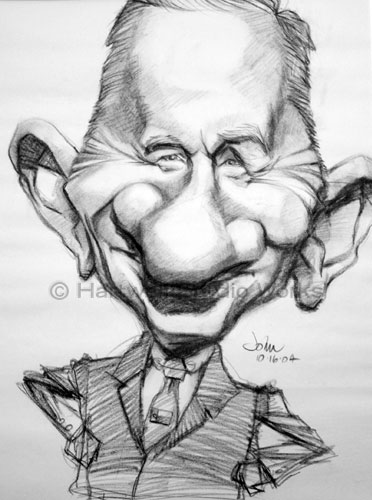
Caricature of God


I can pick on the above gentlemen as I too have been abundantly blessed with ears. The artists have over emphasized the ears of Barak Obama and Ross Perot. While they have big ears, these pictures are obviously an exaggeration of their size. The artists have focused on a particular attribute of their persons.

Many times this is what men do with God. They over emphasize a particular attribute of His nature until the picture they have of God is not true, but a caricaturization of Him. What we must do is put each of God's attributes in proportion to all his attributes, and not to the minimization or elimination of some.

Some people focus so heavily on the holiness of God that barely no one can be saved; after all their best efforts they even worry about themselves. Others focus so heavily on the mercy of God that no one will be lost, including: Dahmer, Hitler, Stalin and Hussein (not Barak). When you do this you have a distorted view of God. The mercy and holiness of God are not competing ideas that you have to accept one or the other. Both are true and are complimentary of each other.
"Mercy and truth are met together; righteousness and peace have kissed each other." Psalms 85:10 KJV
Let's view God how He is, and not how the human mind would portray Him by exaggerating the aspects of God's nature that we choose to emphasize.

Friday, February 18, 2011

Pagan Origin of Fun by James Groce

Fun?

One might wish to investigate the pagan origin of the word.

The word ‘fun’ comes from the name ascribed to a heathen human sacrifice and is actually an acronym meaning; Fellow Unto Sacrifice.

The pagan priest use to sharpen his knife and exclaim, "I am about to have fun! "

Often when the day of sacrifice came due (which was a fun day) and the sacrifice was late arriving- a word would be sent to the site of the sacrifice inquiring, “Are we having fun yet?”

Once a priest lost his knife and only later remembered it was “all in fun.”

So “having fun” was not to amusing to the “fun” guy. Remember this the next time you disclose the fact that you are “having fun,” because it is truly a side-splitting ritual of hell!

-- from James Self's The Study of Pagan Stuff

Wednesday, January 19, 2011

The Cold Within

THE COLD WITHIN

By James Patrick Kinney (see end note)

Six humans trapped by happenstance
In dark and bitter cold
Each one possessed a stick of wood,
Or so the story's told.

Their dying fire in need of logs,
The first woman held hers back.
For on the faces around the fire,
She noticed one was black.

The next man looking cross the way,
Saw one not of his church,
And couldn't bring himself to give
The fire his stick of birch.

The third one sat in tattered clothes,
He gave his coat a hitch.
Why should his log be put to use,
To warm the idle rich?

The rich man just sat back and thought
Of the wealth he had in store.
And how to keep what he had earned
From the lazy, shiftless poor.

The black man's face bespoke revenge
As the fire passed from sight,
For all he saw in his stick of wood
Was a chance to spite the white.

The last man of this forlorn group
Did naught except for gain
Giving only to those who gave
Was how he played the game.

The logs held tight in death's still hands
Was proof of human sin.
They didn't die from the cold without,
They died from ---THE COLD WITHIN.

[Ed. Note] There is a discrepancy in the authorship of this poem. The original submitted work stated that the author was: Douglas C. Corlett © 1987. Recently, we received a few notifications saying that the author is: James Patrick Kinney. Since copies of The Cold Within on other web site list both authors, with Kinney having the oldest date, we have listed him as the author.

Friday, January 7, 2011

2nd Excerpt From "Born Crucified" by L.E. Maxwell

It is not easy to define the word world. The scriptures speak of the "ruler of this world" (John 12:31); of "the course of this world" (Ephesians 2:2), which is according to "god of this world" (2 Corinthians 4:4 KJV); of "the spirit of this world," which is contrary to the Spirit of God (1 Corinthians 2:12); of "the form of this world," which is passing away (1 Corinthians 7:31); and of the wisdom of this world, which "crucified the Lord of Glory" (1 Corinthians 2:8). Little wonder, then, that God says: "Do not love the world"

Friday, December 31, 2010

Long Hair: Cut or Uncut? Part 1

"but if a woman has long hair, it is her glory? For her hair is given to her for a covering."
1 Corinthians 11:15 ESV

The issue of the Christian woman and her hair has been a fundamental tenant of separation among Apostolics for many years. While there are many facets of this issue that could be discussed, I have chose to focus on one. What does "long hair" mean? I have chosen to define it in two ways: 1. The Definition of the word itself. 2. Its usage else were in scripture.

LONG HAIR

Firstly, the Greek word for "long hair" is komaō. It means, "to let the hair grow." If one cuts their hair they are not letting it grow. This is evidenced by the fact that if a man has "long hair" it is a shame to him (1 Corinthians 11:14); that is if a man has uncut hair. Long hair on a man is uncut hair; therefore long hair on a woman would also be uncut hair. Uncut hair is a shame to a man and a glory to a woman. As John Gill said, "But if a woman have long hair,.... And wears it, without cutting it, as men do"

Secondly, the way long hair is used elsewhere in scripture would seem to demand the idea of uncut, or not trimmed.
"They shall not shave their heads or let their locks grow long; they shall surely trim the hair of their heads." Ezekiel 44:20
In this verse it is clear that trimming the hair would prevent it from being long. Long hair is untrimmed hair. This is not the only verse that indicates this.
"All the days of his vow of separation, no razor shall touch his head. Until the time is completed for which he separates himself to the LORD, he shall be holy. He shall let the locks of hair of his head grow long." Numbers 6:5 ESV
The command to the one under the Nazirite Vow is: "He shall let the locks of hair of his head grow long." This is set in contrast to, "no razor shall touch his head." Clearly the Nazirite vow prohibited any cutting of the hair. John Gill says, "he might not shave his beard, nor cut off his locks, and shave his head, nor cut short his locks with a pair of scissors, nor any with anything by which the hair may be removed, as Ben Gersom; nor pluck off his hair with his hands, as Maimonides says (x); but let it grow as long as it would during the time of his separation"

The traditional Apostolic view on uncut hair on women is correct and should be taught as doctrine. I am thankful for the Godly ladies in our churches, especially my wife, who honors God and their husbands by not cutting their hair. To all the Godly ladies of Pentecost I say, thank you.


Monday, December 20, 2010

Is That True or Truth?


"Finally, brethren, whatsoever things are true, whatsoever things are honest, whatsoever things are just, whatsoever things are pure, whatsoever things are lovely, whatsoever things are of good report; if there be any virtue, and if there be any praise, think on these things."
Philippians 4:8 KJV

I want to write something that is close to me through personal experience, as well as observation of personal friends, as well as personal failure on my part in not living up to what I am about to write about. I have had to repent for this failure more than once. It is easy to fall short in this area as evidenced by the frequency that it happens. If we will be honest with ourselves we would all have to admit that we have been guilty of this at some point.

What I am about to write addresses the issue of truth: How do we determine it? How do we perceive it? More importantly, how do we speak it and why? This is the heart of the issue. I intend to suggest that merely settling for the content of our speech being true without the intent of our speech being truth is not sufficient.

This is many times the justification for malicious gossip and character assassination; but what I said is true. True alone is not sufficient; truth is the objective. The question is, how do you make what is true, truth. Is there a difference?

Our text says: "whatsoever things are true, whatsoever things are honest, whatsoever things are just" This verse indicates at least subtle distinctions between what is true and honest, and what is true and just.

TRUE VS. HONEST

Firstly, the distinction between what is true and honest. Just because something it true does not mean it is honest. The wilderness temptation of Matthew 4 is the perfect illustration. When Satan quotes scripture he is saying what is true, but no one can say that he was honest. While the Devil can speak things that are true, there is "no truth in him (John 8:44)."

The Devil was manipulating what was true for his dishonest agenda. What he said was true, but it was not honest. What is true, but not honest is not truth.

TRUE VS. JUST

The ways of the Lord God are "just and true (Revelation 15:3 ESV);" not only true, but also just. It is true that Jesus was crucified, but it was not just. Obviously what is true and what is just is not the same.

CONCLUSION

The only way for what is true to be truth, is when what is true is also honest and just. Let this serve as a model to us in what we say about others. I know that what you said may have been true, but was it honest and just. What was your motive for saying it? Did the true thing that you said have honest intent? Was the desired end result of the true thing that you said just? If not, then don't call it the truth.

Only when what is true is spoken honestly with the desire for a just outcome is what is said "truth." Let's endeavor to not only say what is true, but tell the truth!

Sunday, December 5, 2010

The Stupidest Question You Can Ask About the Holy Ghost

The stupidest question about the Holy Ghost is not asked by the person who has never heard about it. The stupidest question is not, "Is it real?" The stupidest question is not, "Can I have it?" The stupidest question is not, "How do you get it?"

The stupidest question that I have ever heard about the Holy Ghost is from the person who knows from scripture that it is real and available, yet with hard and stubborn heart ask, "Do I have to have it to be saved?" "Will I be lost if I don't get it?" "Do you mean to tell me that I will go to hell if I don't get it?"

With something as great as the Holy Ghost, why does the question have to be, "Will I go to hell without it?" Whether or not a person has to have it to be saved should have no bearing on them wanting it. If it is a gift from God, why would you not want it? This question is like offering someone a rib eye that is grilled to perfection and them asking, "Will I starve to death if I don't eat it?"


"Oh, taste and see that the LORD is good! Blessed is the man who takes refuge in him!" Psalms 34:8 ESV

Friday, December 3, 2010

In Memory of Jack Carter

I want to first speak to the family: Aunt Edith, Nick, Angie and Nieci. My love and prayers are with you in this time of pain and loss. Not only have I prayed with you, but I have also cried and hurt with you. As much as possible, having never experienced that loss, I empathize.

Thinking about what to say I was reminded of a text of scripture:

A good name is better than precious ointment, and the day of death than the day of birth. Ecclesiastes 7:1 ESV

What determines a good name is not its spelling or verbal pronunciation, rather the acts associated with the person who bears the name. It is neither the spelling nor pronunciation of the name that makes Delilah, Jezebel, Satan, Lucifer or Judas bad names. It is the acts associated with these names that make them bad. No one names their daughter Jezebel, or their son Lucifer.

On the other hand it is neither the spelling nor pronunciation that makes the names Abraham, Paul, Peter, Elijah or Jesus good names. Again, the acts associated with a name are what makes it great. That is why the name Jesus is “the name above every name.

The same applies to Uncle Jack. I can’t help but remember the continued and faithful support that Uncle Jack has shown my family over the years. He has always demonstrated great respect for my father as a man of God. He was never anything but respectful.

I also remember a visit my family made to Uncle Jack and Aunt Edith’s home, and Uncle Jack hired me to clean up some junk from the yard. As a kid who traveled with his father on the evangelistic field, any extra monies that I personally received were greatly appreciated. To me, the name “Jack” will always be a good name.

To his family he was a great provider, hard worker, and a husband and father who cared deeply for his family. Over the years he demonstrated that love by just being there. In a world where dead-beat dads and missing mothers are becoming the norm, he was committed. In situations where leaving would have been easier, he stayed. To the Carter family: Edith, Nick, Angie and Nieci, and all the grandchildren, “Jack” should always be a good name.

The Value of Friendship


Run your car off the side of the road
Get stuck in a ditch way out in the middle of nowhere
Or get yourself in a bind lose the shirt off your back
Need a floor, need a couch, need a bus fare

This is where the rubber meets the road
This is where the cream is gonna rise
This is what you really didn't know
This is where the truth don't lie

{Chorus}
You find out who your friends are
Somebody's gonna drop everything
Run out and crank up their car
Hit the gas, get there fast
Never stop to think 'what's in it for me?' or 'it's way too far'
They just show on up with their big old heart
You find out who your friends are

Everybody wants to slap your back
wants to shake your hand
when you're up on top of that mountain
But let one of those rocks give way then you slide back down look up
and see who's around then

This ain't where the road comes to an end
This ain't where the bandwagon stops
This is just one of those times when
A lot of folks jump off

{Chorus}

When the water's high
When the weather's not so fair
When the well runs dry
Who's gonna be there?

{Chorus}

You find out who your friends are
(yeah, yeah)
You find out who your friends are

Run your car off the side of the road
Get stuck in a ditch way out in the middle of nowhere
(Well man, I've been there)
Or get yourself in a bind lose the shirt off your back
Need a floor, need a couch, need a bus fare
(Man, I've been there)

Pardon the reference to a secular song, but the message is incredible. The value of a friend is priceless. A friend who is truly loyal. A friend that will face you when you are wrong, but will not forsake you when you are wrong. All of us want a friend like that. The best way to gain that kind of friend is to give that kind of friendship. I will write on this again so this will suffice for now.

Thursday, December 2, 2010

Excerpt From "Born Crucified" By L.E. Maxwell

"DURING THE CIVIL WAR, George Wyatt was drawn by lot to go to the the front. He had a wife and six children. A young man named Richard Pratt offered to go in his stead. He was accepted and joined the ranks, bearing the name and number of George Wyatt. Before long Pratt was killed in action.

The authorities later sought again to draft George Wyatt into service. He protested, entering the plea that he had died in the person of Pratt. He insisted that the authorities consult their own records as to the fact of his having died in identification with Pratt, his substitute. Wyatt was thereby exempted as beyond the claims of law and further service. He had died in the person of his representative."

What a beautiful picture of the cross!

Wednesday, December 1, 2010

Matthew 19:9: Espoused or Married Wife Part 2

In recent discussions with various friends on the subject of divorce and remarriage the issue of Matthew 19:9 came up. As I am aware there are only two ways to view this verse: 1. The wife of Matthew 19:9 is the espoused wife (Deuteronomy 22:23, Matthew 1:18-20). 2. The wife of Matthew 19:9 is not an espoused/betrothed wife, rather she is a married wife (Deuteronomy 24)1. Let me state here, in case you have not read my other blogs on this issue, I hold to the second view.

Two things should be noted about the first view: Why they conclude that Matthew 19:9 is the espoused/betrothed wife and not the married wife. The way they arrive at that conclusion. The why and the way are important to understand. The way they arrive at their conclusion is baseless. The why is equally unwarranted.

Firstly the why. The reason why they conclude that the wife of Matthew 19:9 is the espoused wife, and not the married wife, is to avoid the obvious implication that infidelity on part of a married person is grounds for the innocent party to divorce and remarry. However, this is the necessary implication of this text if a married wife is under consideration as I contend.

Secondly the way. The way they attempt to prove that the wife of Matthew 19:9 is the espoused wife, and therefore hold to a no divorce and remarriage for any reason view, is by appealing to Matthew's use of the word fornication. Among those who reject that the exception clause of Matthew 19:9 applies to married persons there are two arguments made about the word fornication: 1. Married people cannot commit fornication; therefore the term fornication demands that the Matthew 19:9 wife is an espoused wife. 2. The word fornication, if used alone, can include adultery; however, when both fornication and adultery are used in the same context they are being contrasted and cannot refer to the same thing. I have responded both of these arguments in other blogs. 2, 3

When you look at the context of Matthew 19 you readily understand that the married wife is the kind of wife that is under consideration:
  1. With the wife under consideration they had been "joined together" by God, and they had become "one flesh," an obvious euphemism describing sexual union (1 Corinthians 6:16).
  2. The wife they were discussing had to be given a bill of divorcement as prescribed by Moses. The only possible law they could be appealing to is Deuteronomy 24:1. The wife of Deuteronomy 24:1 was the married wife; when she was given the bill of divorcement by her husband he "sends her out of his house, and she departs out of his house." Surely no one would suggest that this describes the espousal period, as cohabitation would not have been permitted by the law.
These facts demand that the married wife be under consideration in Matthew 19. To consider otherwise is, in my opinion, not being honest with the context.

This finally brings me to the purpose that I am writing this particular blog. In response to my argument, based on Deuteronomy 24, that the wife of Matthew 19 is the married wife and not the espoused wife, a friend of mine argued that "uncleanness" in Deuteronomy 24 cannot be sexual in nature. I want to try to honestly set forth his argument and then give a response.

My friend's argument is: uncleanness in Deuteronomy 24:1 cannot be sexual because the punishment for uncleanness is she is put out of her husband's house; however, the punishment for sexual sin demanded she be put to death (Deuteronomy 22). If the sin of uncleanness was sexual, she would be put to death, not merely put out of her husband's house. His argument is that death was mandatory for sexual sins, therefore "uncleanness" could not be sexual.

If I can demonstrate a single case which shows this premise to be false, then his argument fails. One of the cases that carried the death penalty was the unfaithfulness of a betrothed woman.
Deuteronomy 22:23-24 ESV
23 "If there is a betrothed virgin, and a man meets her in the city and lies with her,
24 then you shall bring them both out to the gate of that city, and you shall stone them to death with stones, the young woman because she did not cry for help though she was in the city, and the man because he violated his neighbor's wife. So you shall purge the evil from your midst.
This describes a situation where a betrothed virgin willingly lies with a man other than her intended, and her penalty was that she was to be put to death. Is death the only option for the betrayed husband? No. If the betrayed husband finds out about the unfaithfulness of his betrothed must he have her put to death? No. Is there ever case where the betrothed betrays and is spared death? Yes.
Matthew 1:18-20 ESV
18 Now the birth of Jesus Christ took place in this way. When his mother Mary had been betrothed to Joseph, before they came together she was found to be with child from the Holy Spirit.
19 And her husband Joseph, being a just man and unwilling to put her to shame, resolved to divorce her quietly.
20 But as he considered these things, behold, an angel of the Lord appeared to him in a dream, saying, "Joseph, son of David, do not fear to take Mary as your wife, for that which is conceived in her is from the Holy Spirit.
It must be pointed out that when Joseph realized that his betrothed was with child, the only logical answer in his mind was betrayal. He was unaware that a miracle had taken place. It was only later that he was visited by the angel and became aware of this fact. He decided, while fully convinced that she had been unfaithful, to "divorce her quietly." You mean there was an option other than death that was available to him? Yes.

So, it is entirely possible, as we have an example, that a wife could commit an act punishable by death and merely be "put away (KJV)," and not "put to death." Therefore, uncleanness could include something of a sexual nature. The same would also have to be true of the other cases in Deuteronomy 22. I will examine this in more depth in a later post.

Secondly, it would not matter if uncleanness did not include a sexual sin. Let's say that it does not. Jesus contrasted what He taught with what Moses taught and narrowed the parameters. The original question in Matthew 19 was, "can a man put away his wife for ever cause?" Jesus said they could not, "except for fornication." Therefore, even if uncleanness was term used to apply to nonsexual things, Jesus restricts the bill of divorcement to fornication alone and not other causes.

What this does serve to prove, and that the no divorce and remarriage view cannot handle, is that the discussion in Matthew 19 was concerning the married wife of Deuteronomy 24, and consequently proves the wife of Matthew 19:9 is the married wife. This without question allows for divorce and remarriage for fornication.

I just finished this at 1:11am. It probably makes no sense. Please feel free to ask questions for clarification.