Wednesday, May 25, 2011

Prophecy: Who Cares? Part 3

Is there anyone who cares about the pathetic predictions of prophecy pundits? There has been a wide range of responses to the latest Harold Camping episode: ridicule, embarrassment, mockery and dismissal. While we all knew that his date setting would be a failure, it still has a certain degree of impact on how Christianity and the Scriptures are viewed by unbelievers.

Most Christians dismissed him as a fringe wacko. He has been marginalized in the minds of most Christians. He has small influence within the Christian community. However, there are those who are a little more subtle in their predictions and flexible date setting, that still have tremendous influence within the broader Christian community that we should be aware of.

The Hal Lindsey's, Tim LaHaye's and Jack Van Impe's of the world have trotted out their endless parade of missed prophetic predictions. This also occurs among Apostolics as well. How wrong do you have to be, and for how long, before people quit taking you seriously?

Don't let the pathetic prophetic destroy your confidence in the Second Coming of Christ!

But of that day and hour knoweth no man, no, not the angels of heaven, but my Father only. Matthew 24:36 KJV


Prophecy: Who Cares? Part 2

Who cares? Does it really matter what view of eschatology that you hold: Preterist or Futurist? Pre-Tribulation, Mid-Tribulation or Post-Tribulation? Premillennial, Postmillennial or Amillennial? Or any combination thereof? :)

I don't care what view a person holds as long as it includes a future, visible, literal, corporate, bodily second coming of Christ, resurrection of the dead and rapture of the church. While liberty should be extended to differing views of when the rapture occurs, as it relates to the tribulation and the millennium, the future resurrection of the dead and the second coming of Christ are essential components.

Prophecy: Who Cares? Part 1

The subject of eschatology[1] is a topic of much debate and confusion. As a result of this, many just give up on the subject all together. They view the symbols and imagery of the book of Revelation as impossible to understand. It is often joked: “I am pan-trib. I am just going to see how it all pans out.”

Is the subject of biblical prophecy important for us to know? Yes, or it would not have been included in the sacred text. Is the book of Revelation the one book of the New Testament that is expendable? No, the book of Revelation is just as important as every other book of the Bible.

There is a way to understand the book of Revelation. This, however, should not be done with a Bible in one hand and a newspaper in the other. There are approximately 250 citations in the book of Revelation from the Old Testament, and even more allusions. In order to understand the book of Revelation one must have an understanding of Old Testament language.

Proper hermeneutics is the key to understanding of the prophecies of the book of Revelation. That proper hermeneutic is “letting the Bible interpret the Bible.” It is its own best commentary.


[1] any system of doctrines concerning last, or final, matters, as death, the Judgment, the future state, etc."eschatology." Dictionary.com Unabridged. Random House, Inc. 25 May. 2011.

Wednesday, May 18, 2011

Home

I am glad to be home for a few days with my wife and kids. It seems that I rarely see them. I am missing so much of the new things that Lil' Man does. I will have more time in July to be with them and I am looking forward to it.

I also look forward to coming home because you just never know what Lil' Red is going to say. Last night she was begging to go to tarbutts (Starbucks), even correctly telling us where it is. And to think, she is not even 3 yet. I am certain this is only the beginning of her telling us "where to go." :)

Thursday, May 5, 2011

Pigeon (Clay That Is) Hunting With Pastor Don Haymon

May 1-3 I was in Denver, Colorado with Pastor Don Haymon. We had great services and a great time. May 3rd was Pastor Haymon's "40 something" birthday. To celebrate he took me to his shooting club and we shot clay pigeons. It was a great time. All around it was a great trip.

Pastor Haymon snapped this picture perfectly to capture the shell being ejected.

Don "The Destroyer" Haymon

Sunday, April 3, 2011

Fruit of the Spirit

The fruit of the spirit as mentioned in Galatians 5:22-23 are: love, joy, peace, longsuffering, gentleness, goodness, faith, meekness and temperance. I want to simply point out that these attributes are the "fruit of the Spirit," and as a result can only be produced by the Spirit.

When the text says that the fruit of the Spirit is love, it does not refer to the natural love of a mother for a child, or the mutual love of family or friends. These demonstrations of love are natural and do not need the Spirit to produce them; this love is not the "fruit of the Spirit."

The love that is, and must be, produced by the Spirit is a love that does not come natural. This kind of love defies logic and nature. This is the kind of love that compels you to love someone that hates you. This kind of love compels you to love someone who actively seeks your harm and destruction. It is love that does not make sense to the natural man.
"If you love those who love you, what benefit is that to you? For even sinners love those who love them." Luke 6:32 ESV
This verse is natural love that does not need the Spirit's influence. It is the kind of love that the unregenerate sinner has apart from the Holy Spirit. There is, however, dimension of love that only comes from God.
"and hope does not put us to shame, because God's love has been poured into our hearts through the Holy Spirit who has been given to us". Romans 5:5 ESV
The same is true of all of the fruit of the Spirit. Whether it is love, peace or any of the other attributes of the Spirit, there is a natural counterpart; however, they can only reach their fullest potential when they are quickened by the Spirit of God.

In other words: no one should love like someone filled with the Spirit. No one should have peace like someone filled with the Spirit. No one should have joy like someone filled with the Spirit. Let the Holy Spirit maximize your capacity to live!

Thursday, March 31, 2011

Criticism: The Overlooked Compliment

What is at the heart of criticism? What motivates one person to criticize another? At the heart of criticism is pride and self-preservation. Criticism is the weapon that is used to destroy another in an attempt to protect my sphere of influence. Criticism is used against another person whose circle of influence has threatened mine. We criticize in order to marginalize!

Dinesh D'Souza, Author of What's So Great About Christianity, powerfully points out that we only attack what we are threatened by. He makes the parallel between books written against God by Richard Dawkins and Christopher Hitchens, and the absence of books written against unicorns. Dawkins wrote The God Delusion, and Hitchens wrote God Is Not Great. No one writes books like: The Unicorn Delusion, or Unicorns Are Not Great, because unicorns are irrelevant. The point he is making is that there is something about God that threatens Dawkins and Hitchens. As Pastor Steve Pixler points out: the reason they are so vocal is they are "trying to drown out the voice of God in their own minds."

Inherent to criticism is a respect or fear of the person criticized. We are afraid of their influence, so we criticize in order to marginalize. Criticism is a recognition of the gifts, talents, skills, intellect and influence of another person. So, to preserve my influence I have to destroy their influence.

I write this as a confession of my own motivation for criticism. I can't think of a time that I have criticized a person that it was not born out of pride and jealousy. I have had to repent more than once of this awful sin.

Really criticism is a compliment and a display of respect, and maybe in some twisted way a form of flattery. So, when your are criticized, feel flattered and take it as a compliment. Not only is criticism the overlooked compliment, it is usually the uncomfortable and unsolicited compliment. One could say, "With compliments like that, who needs criticism?"

P.S. This is only one aspect of criticism. The subject of criticism is much more dynamic than this.

Wednesday, March 30, 2011

The Hypocrisy of Bitterness

Bitterness is usually born out of betrayal, or the feeling of having been done wrong. Bitterness is justified because one feels his own righteous superiority over his offender; I did not deserve to be treated that way. Because bitterness is self-righteous at its core, it will also become self-justifying. This is carried out by accusing the offender and excusing one's self at all cost. The person who offended me is wrong, period; on the other hand I am right, period. Bitterness gives no consideration to the offenders motives, only his actions.

Bitterness, in its self-righteous and self-justifying way, not only gives voice to the offenders faults, it also actively seeks the offenders destruction. Bitterness, through self-righteousness and self-justification, abandons ethical constraints; it begins to excuse itself from the ethical obligation it imposes on everyone else. Herein is the hypocrisy of bitterness: the bitter person begins to treat their offender as bad, or worse, than the offender treated them. The very thing the embittered person condemns in his offender, he justifies in himself. Let me give just two examples.

1. Many times in cases of marital unfaithfulness, the "innocent" spouse becomes bitter. This bitterness is justified by the offended spouse because of the awful betrayal on the part of the offending spouse. If this bitterness continues unchecked it will, in its own self-righteous and self-justifying way, quickly dispense with moral and ethical restraints. This bitterness will drive its victims to justify in themselves what they hated in their offenders.

Bitterness will drive an offended and embittered husband to justify viewing pornography, because what she did was much worse. "At least I am not actually having an affair," he justifies self-righteously.

Bitterness will drive an offended and embittered wife to justify having an affair solely for the purpose of making the husband pay for what he did.

2. It is easy for a pastor who is robbed of members by an unethical neighboring pastor to become bitter. As a result he will talk about how detests that no good sheep thief and began to shout ministerial ethics from the roof top. That same bitterness, left unchecked, will cause him to take advantage of opportunities to steal saints from the man who offended him, and justify it.

The bitter pastor will not stop with the man who offended him. He will look for reasons to become suspicious of other men as well to justify stealing from them, all the while still condemning the man who originally betrayed him.

CONCLUSION:

Saints and Ministry: let's do not let our bitternesses make hypocrites out of us. Let us not justify in ourselves what we detest in others. There will be plenty opportunities to become bitter, so let us pray for the grace of God to save us from this awful poison.

Friday, March 11, 2011

Lessons From Egypt: How Not To Lead

Exodus 1:8-11 ESV
8 Now there arose a new king over Egypt, who did not know Joseph.
9 And he said to his people, "Behold, the people of Israel are too many and too mighty for us.
10 Come, let us deal shrewdly with them, lest they multiply, and, if war breaks out, they join our enemies and fight against us and escape from the land."
11 Therefore they set taskmasters over them to afflict them with heavy burdens. They built for Pharaoh store cities, Pithom and Raamses.

I am going to make this short and to the point. If anyone wants to contribute to the conversation we can discuss it more. I would love your input, especially from leaders!

Now there arose a new king over Egypt, who did not know Joseph: By not knowing Joseph he does not know the people of Israel. Whether this is merely an ignorance of historical events I don't know, but it is certainly an ignorance resulting from a lack of relationship. You have a king that assumes a position over a people that he does not know, neither seeks to know. He is a king who is only concerned with POSITION and not PEOPLE; RULE and not RELATIONSHIP. It will always lead to disaster when we seek to lead those with whom we have no relationship.

And he said to his people, "Behold, the people of Israel are too many and too mighty for us: Secondly, this king becomes intimidated by the strength of his subjects. When leadership is motivated by position or power and not people, it always becomes intimidated by the strength of those it seeks to lead.

Come, let us deal shrewdly with them, lest they multiply, and, if war breaks out, they join our enemies and fight against us and escape from the land": Thirdly, leadership becomes suspicious of people and their motives. This too is a by product of the lack of relationship. If the king of Egypt really knew the people of Israel, he would have been comforted by their strength and not intimidated by it. And if he and really known them he would not have been suspicious of their motives. Both the intimidation and the suspicion were born out of a lack of relationship.

Therefore they set taskmasters over them to afflict them with heavy burdens. They built for Pharaoh store cities, Pithom and Raamses: When a leader becomes intimidated and suspicious of his subjects, he will eventually begin to oppress them. Ironically, the reason that the king of Egypt began to oppress them was fear that they would "escape from the land." The very thing that he sought to prevent by oppression, he caused by oppression. The king of Egypt began to oppress a peaceable and profitable people, because of intimidation and suspicion, and as result unrest rose and profitability decreased.

CONCLUSION: This more a note to myself, than a message to anyone else. I am reading through Exodus for my daily devotions and this is some thoughts that are in my head.

Saturday, March 5, 2011

Get More Than One Friend

When I say, "Get More Than One Friend," I mean two things: first of all, you need more than one friend numerically. Secondly, you need more that one friend categorically. I will address the numerical aspect first, then the categorical afterwards.

NUMERICALLY:

You need more than one friend numerically because you (myself included) have a lot of issues. While you may find someone who is willing to try to befriend all of you, at some point they are going to need a break. Be a friend to your friends and spread yourself around. Don't make one person responsible for having to deal with all your issues.

No one person can fully satisfy all of your relationship needs, including a spouse. When you make one person responsible for satisfying your relationship needs you have set the relationship up for failure. It is simply to great of a demand to make of any one person. Many times jealousy is a result of this unrealistic expectation.

CATEGORICALLY:

You need more than one friend categorically. Because it is to much to demand of one friendship to supply all your relationship needs (intellectual, emotional, spiritual, social ect...), get specialized friends. In other words, develop a relationship whose primary contribution to your life is intellectual, and one whose primary contribution is spiritual and so on.

You can have a friend in your life that can fill multiple faucets of friendship; however, no matter who they are, they cannot completely satisfy your relationship needs. Expand your relationships, it is going to make you a better person.

Tuesday, March 1, 2011

For His Name's Sake

This post will not be nearly as spiritual as the title sounds. I have gotten numerous questions and emails asking why my parents named me John Calvin. Some have thought that I was joking when I told them what my name was.

Pat Donahue, a Church of Christ friend of mine that I have debated, asked, "Why did your parents name you John Calvin when they appose his doctrine of Calvinism?" When Elder Todd Nance found out what my name was he simply responded, "That explains a lot." :)

The answer to why my parents named me John Calvin is: 1. When I was born they immediately recognized by my incessant screaming that I was T-Totally Depraved. 2. Because I was U-Unconditionally Elected they knew that they had been predestined to name me John Calvin. 3. As mean as I was, they knew that even the cross and all its power would only be able to give me L-Limited Atonement. 4. They knew that the only way that I would get saved is if God left me no choice and saved me against my will with I-Irresistible Grace. 5. They knew that the only way that I would be a P-Preserved Saint and stay saved was for God to make it where no matter what I did I couldn't be lost. :) Also, my mother knew that she was pregnant with me when she woke up one morning with and irresistible urge to plant three acres of TULIPS.

The other sided of the coin is: my paternal grandfather was Born August 6, 1926 and his name was John Calvin Carroll, and his nickname was "Buddy." So, when I was born August 6, 1975 I was named John Calvin Carroll, and most people know me by the name that I grew up being called, "Buddy." That is how it happened. And now you know the rest of the story.

Friday, February 25, 2011

Praying Politically

1 Timothy 2:1-3 ESV
"First of all, then, I urge that supplications, prayers, intercessions, and thanksgivings be made for all people, 2 for kings and all who are in high positions, that we may lead a peaceful and quiet life, godly and dignified in every way. 3 This is good, and it is pleasing in the sight of God our Savior,"

This is not a prayer that we often consider; praying for Kings and all who are in high positions. Maybe I am blinded by my own failure in this area, but it does not seem that the church is engaged in praying for world leaders. This must become a part of our personal and corporate intercession.

We preach, talk and complain about the political condition of the world, but we don't do a lot of praying about it. I believe that it is the will of God for all nations and kings to bow their knees to the Lordship if Jesus Christ. We must participate in this process through prayer. More important than voting and protesting, which are important rights and responsibilities, is prayer.

Let me make a subtle point here. We are to pray FOR them and not AGAINST them. Many times when prayer is made for political leaders it is in the context of a president or senator that we dislike and so we pray against them. This is an arrogant prayer that presumptuously imposes our will on the process. Many times this is nothing more than sanctified sorcery. What we should be doing is praying for the will of God in their lives; praying that God would turn their heart, if indeed they be wicked.

The purpose of the prayer is: "that we may live a peaceful and quiet life." We should be praying that the hearts of mayors, senators, governors, congressmen and presidents would be turned by God to enact laws that facilitate the advancement of the kingdom of God. Not only in the United States, but world-wide.

I challenge you to pray FOR, and not AGAINST, our leaders. Begin with the leaders in your city and state, and then the president and other world leaders. Pray equally! Pray FOR Democrats, Independents, Republicans, members of the Tea Party. God does not carry a political affiliation; He is not a Republican or a Democrat! We cannot sit by without fulfilling the command of scripture to "Pray Politically."


Different Kinds of People In Your Life


Whether or not you like the messenger, this is a valuable lesson we all have to learn. We need God to give us discernment to know why certain people are in our lives.

Thursday, February 24, 2011

The Ultimate Shepherd


1 Peter 5:4 ESV
And when the chief Shepherd appears, you will receive the unfading crown of glory.

Psalms 23:1-6 ESV
1 A Psalm of David. The LORD is my shepherd; I shall not want.
2 He makes me lie down in green pastures. He leads me beside still waters.
3 He restores my soul. He leads me in paths of righteousness for his name's sake.
4 Even though I walk through the valley of the shadow of death, I will fear no evil,

FOR YOU ARE WITH ME: CHRIST THE COMPANION SHEPHERD

YOUR ROD AND STAFF, THEY COMFORT ME: CHRIST THE COMFORTING SHEPHERD

YOU PREPARE A TABLE BEFORE ME IN THE PRESENCE OF MY ENEMIES: CHRIST THE CULINARY SHEPHERD

YOU ANOINT MY HEAD WITH OIL: CHRIST THE COVERING SHEPHERD

MY CUP OVERFLOWS: CHRIST THE COPIOUS SHEPHERD

6 Surely goodness and mercy shall follow me all the days of my life, and I shall dwell in the house of the LORD forever.

Sunday, February 20, 2011

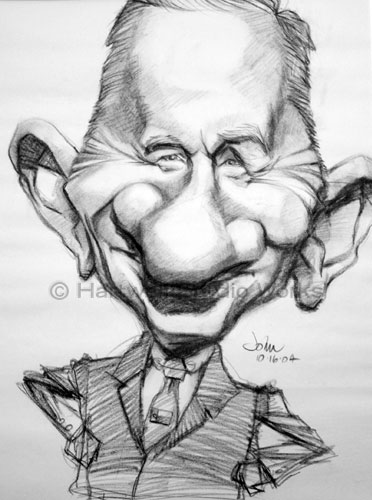
Caricature of God


I can pick on the above gentlemen as I too have been abundantly blessed with ears. The artists have over emphasized the ears of Barak Obama and Ross Perot. While they have big ears, these pictures are obviously an exaggeration of their size. The artists have focused on a particular attribute of their persons.

Many times this is what men do with God. They over emphasize a particular attribute of His nature until the picture they have of God is not true, but a caricaturization of Him. What we must do is put each of God's attributes in proportion to all his attributes, and not to the minimization or elimination of some.

Some people focus so heavily on the holiness of God that barely no one can be saved; after all their best efforts they even worry about themselves. Others focus so heavily on the mercy of God that no one will be lost, including: Dahmer, Hitler, Stalin and Hussein (not Barak). When you do this you have a distorted view of God. The mercy and holiness of God are not competing ideas that you have to accept one or the other. Both are true and are complimentary of each other.
"Mercy and truth are met together; righteousness and peace have kissed each other." Psalms 85:10 KJV
Let's view God how He is, and not how the human mind would portray Him by exaggerating the aspects of God's nature that we choose to emphasize.

Friday, February 18, 2011

Pagan Origin of Fun by James Groce

Fun?

One might wish to investigate the pagan origin of the word.

The word ‘fun’ comes from the name ascribed to a heathen human sacrifice and is actually an acronym meaning; Fellow Unto Sacrifice.

The pagan priest use to sharpen his knife and exclaim, "I am about to have fun! "

Often when the day of sacrifice came due (which was a fun day) and the sacrifice was late arriving- a word would be sent to the site of the sacrifice inquiring, “Are we having fun yet?”

Once a priest lost his knife and only later remembered it was “all in fun.”

So “having fun” was not to amusing to the “fun” guy. Remember this the next time you disclose the fact that you are “having fun,” because it is truly a side-splitting ritual of hell!

-- from James Self's The Study of Pagan Stuff

Wednesday, January 19, 2011

The Cold Within

THE COLD WITHIN

By James Patrick Kinney (see end note)

Six humans trapped by happenstance
In dark and bitter cold
Each one possessed a stick of wood,
Or so the story's told.

Their dying fire in need of logs,
The first woman held hers back.
For on the faces around the fire,
She noticed one was black.

The next man looking cross the way,
Saw one not of his church,
And couldn't bring himself to give
The fire his stick of birch.

The third one sat in tattered clothes,
He gave his coat a hitch.
Why should his log be put to use,
To warm the idle rich?

The rich man just sat back and thought
Of the wealth he had in store.
And how to keep what he had earned
From the lazy, shiftless poor.

The black man's face bespoke revenge
As the fire passed from sight,
For all he saw in his stick of wood
Was a chance to spite the white.

The last man of this forlorn group
Did naught except for gain
Giving only to those who gave
Was how he played the game.

The logs held tight in death's still hands
Was proof of human sin.
They didn't die from the cold without,
They died from ---THE COLD WITHIN.

[Ed. Note] There is a discrepancy in the authorship of this poem. The original submitted work stated that the author was: Douglas C. Corlett © 1987. Recently, we received a few notifications saying that the author is: James Patrick Kinney. Since copies of The Cold Within on other web site list both authors, with Kinney having the oldest date, we have listed him as the author.

Friday, January 7, 2011

2nd Excerpt From "Born Crucified" by L.E. Maxwell

It is not easy to define the word world. The scriptures speak of the "ruler of this world" (John 12:31); of "the course of this world" (Ephesians 2:2), which is according to "god of this world" (2 Corinthians 4:4 KJV); of "the spirit of this world," which is contrary to the Spirit of God (1 Corinthians 2:12); of "the form of this world," which is passing away (1 Corinthians 7:31); and of the wisdom of this world, which "crucified the Lord of Glory" (1 Corinthians 2:8). Little wonder, then, that God says: "Do not love the world"

Friday, December 31, 2010

Long Hair: Cut or Uncut? Part 1

"but if a woman has long hair, it is her glory? For her hair is given to her for a covering."
1 Corinthians 11:15 ESV

The issue of the Christian woman and her hair has been a fundamental tenant of separation among Apostolics for many years. While there are many facets of this issue that could be discussed, I have chose to focus on one. What does "long hair" mean? I have chosen to define it in two ways: 1. The Definition of the word itself. 2. Its usage else were in scripture.

LONG HAIR

Firstly, the Greek word for "long hair" is komaƍ. It means, "to let the hair grow." If one cuts their hair they are not letting it grow. This is evidenced by the fact that if a man has "long hair" it is a shame to him (1 Corinthians 11:14); that is if a man has uncut hair. Long hair on a man is uncut hair; therefore long hair on a woman would also be uncut hair. Uncut hair is a shame to a man and a glory to a woman. As John Gill said, "But if a woman have long hair,.... And wears it, without cutting it, as men do"

Secondly, the way long hair is used elsewhere in scripture would seem to demand the idea of uncut, or not trimmed.
"They shall not shave their heads or let their locks grow long; they shall surely trim the hair of their heads." Ezekiel 44:20
In this verse it is clear that trimming the hair would prevent it from being long. Long hair is untrimmed hair. This is not the only verse that indicates this.
"All the days of his vow of separation, no razor shall touch his head. Until the time is completed for which he separates himself to the LORD, he shall be holy. He shall let the locks of hair of his head grow long." Numbers 6:5 ESV
The command to the one under the Nazirite Vow is: "He shall let the locks of hair of his head grow long." This is set in contrast to, "no razor shall touch his head." Clearly the Nazirite vow prohibited any cutting of the hair. John Gill says, "he might not shave his beard, nor cut off his locks, and shave his head, nor cut short his locks with a pair of scissors, nor any with anything by which the hair may be removed, as Ben Gersom; nor pluck off his hair with his hands, as Maimonides says (x); but let it grow as long as it would during the time of his separation"

The traditional Apostolic view on uncut hair on women is correct and should be taught as doctrine. I am thankful for the Godly ladies in our churches, especially my wife, who honors God and their husbands by not cutting their hair. To all the Godly ladies of Pentecost I say, thank you.